Key facts for Belgium
Christmas and New Year are the main business gifting occasions; Saint Nicholas is also observed.
How companies in Belgium give year-end gifts
In Belgium, end-of-year gifts cover three linked occasions: Saint Nicholas on 6 December, Christmas and New Year. Employers often give staff a gift or gift vouchers within the social-security exemption, which applies to the combined value of Saint Nicholas, Christmas and New Year gifts, with an additional amount per dependent child. Client gifts are usually sent in December, and New Year wishes in January are common, particularly in Wallonia and Brussels. Belgium has its own strong chocolate tradition, so chocolate gifts should stand out through branding and presentation. Language is important: use Dutch for Flanders, French for Wallonia and Brussels, and German for the East Cantons; bilingual Dutch–French cards are standard for national companies.
Gift occasions in Belgium
Saint Nicholas (Sinterklaas / Saint-Nicolas)
a traditional occasion for chocolate and sweets, also for employees' children
Christmas
main occasion for staff and client gifts
New Year
New Year greetings and gifts are common, especially in French-speaking Belgium
Good practice
- Use the recipient's language: Dutch, French or German; bilingual cards for national companies
- For staff, keep the combined Saint Nicholas, Christmas and New Year gift within the exempt amount
- Consider Saint Nicholas (6 December) gifts for employees' children
Avoid
- Do not send a French-only card to a Flemish company, or vice versa
- Avoid giving more than the exempt amount if you want staff gifts to stay outside social-security contributions
Design and wording
Christmas themes are appropriate; 'Happy Holidays' designs work for mixed teams.
Tax rules on business gifts
| Clients and partners | — |
|---|---|
| Employees | Gifts in kind or gift vouchers for Saint Nicholas, Christmas or New Year are exempt from social-security contributions up to EUR 40 per employee per year in total, plus EUR 40 per dependent child, if granted under a uniform scheme; the same limit is used for withholding-tax exemption (secondary sources). |
General information, not tax advice. Check with your accountant. Sources: [1] [2]
Delivery to Belgium
Intra-EU shipment from Poland: no customs declarations or import duties; prices are quoted with the applicable VAT treatment for your company.
Planning dates for Belgium
| Order personalized stock advent calendars by | 20 Nov 2026 |
|---|---|
| Order Christmas hampers by | 1 Dec 2026 |
| Fully custom calendars for 2027 — order between | 01.2027 – 08.2027 |
Indicative planning dates; exact dates are confirmed in your proposal.
Recommended formats for Belgium
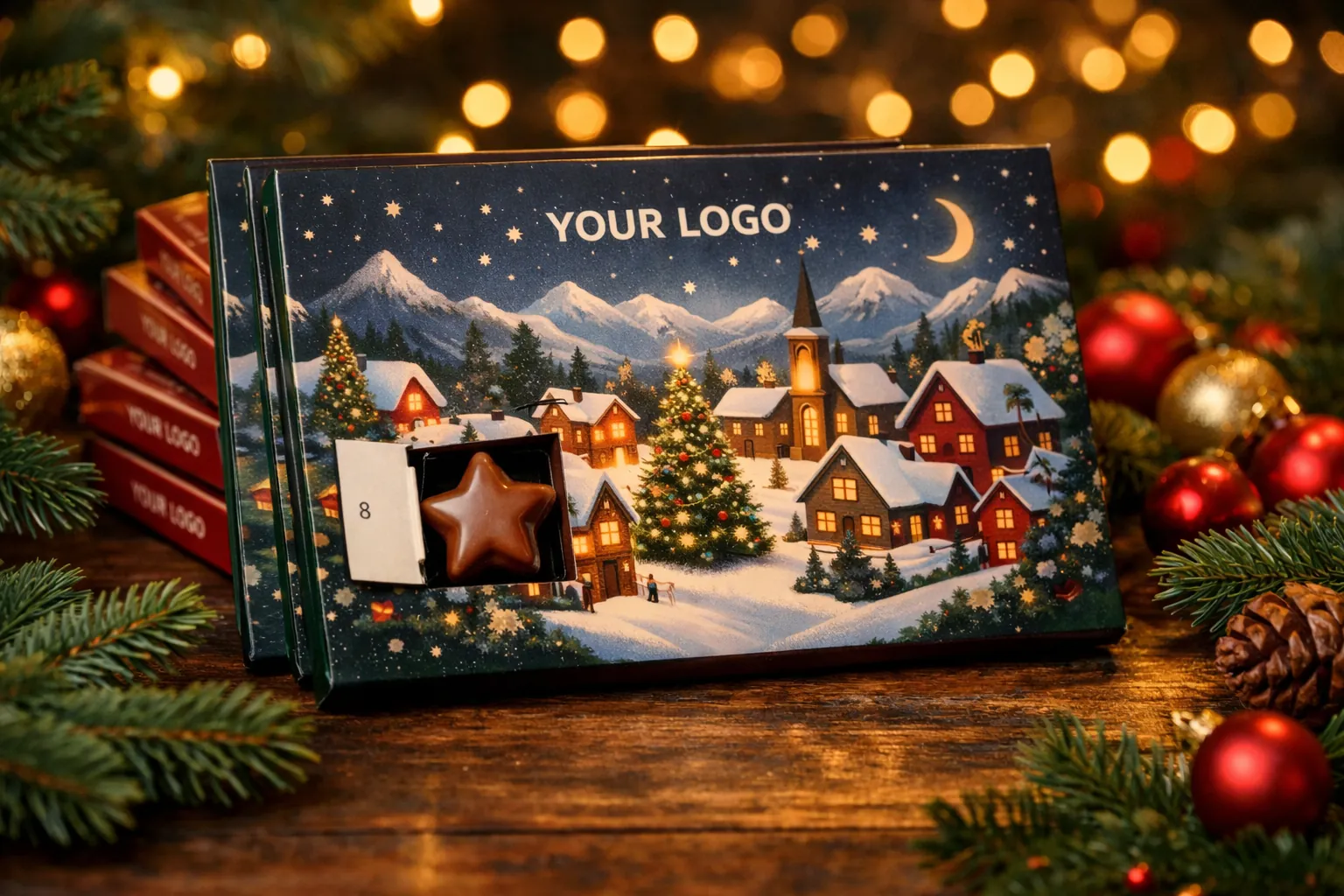
Chocolate advent calendars
Twenty-four chocolates and your brand on the front from 1 to 24 December.
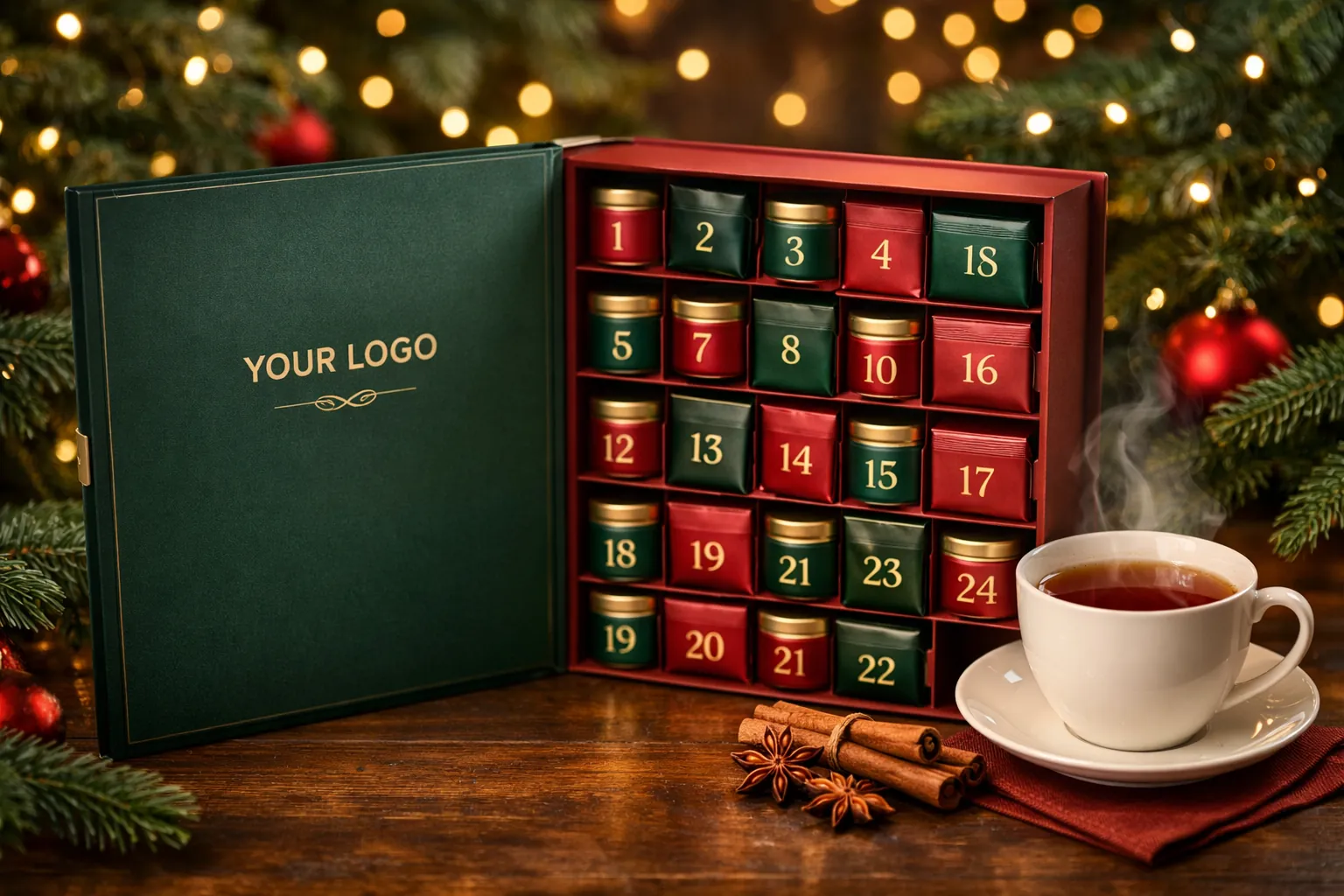
Tea & coffee calendars
A tea or coffee advent calendar with your logo is a measured, practical gift for clients and colleagues who prefer to avoid sweets.
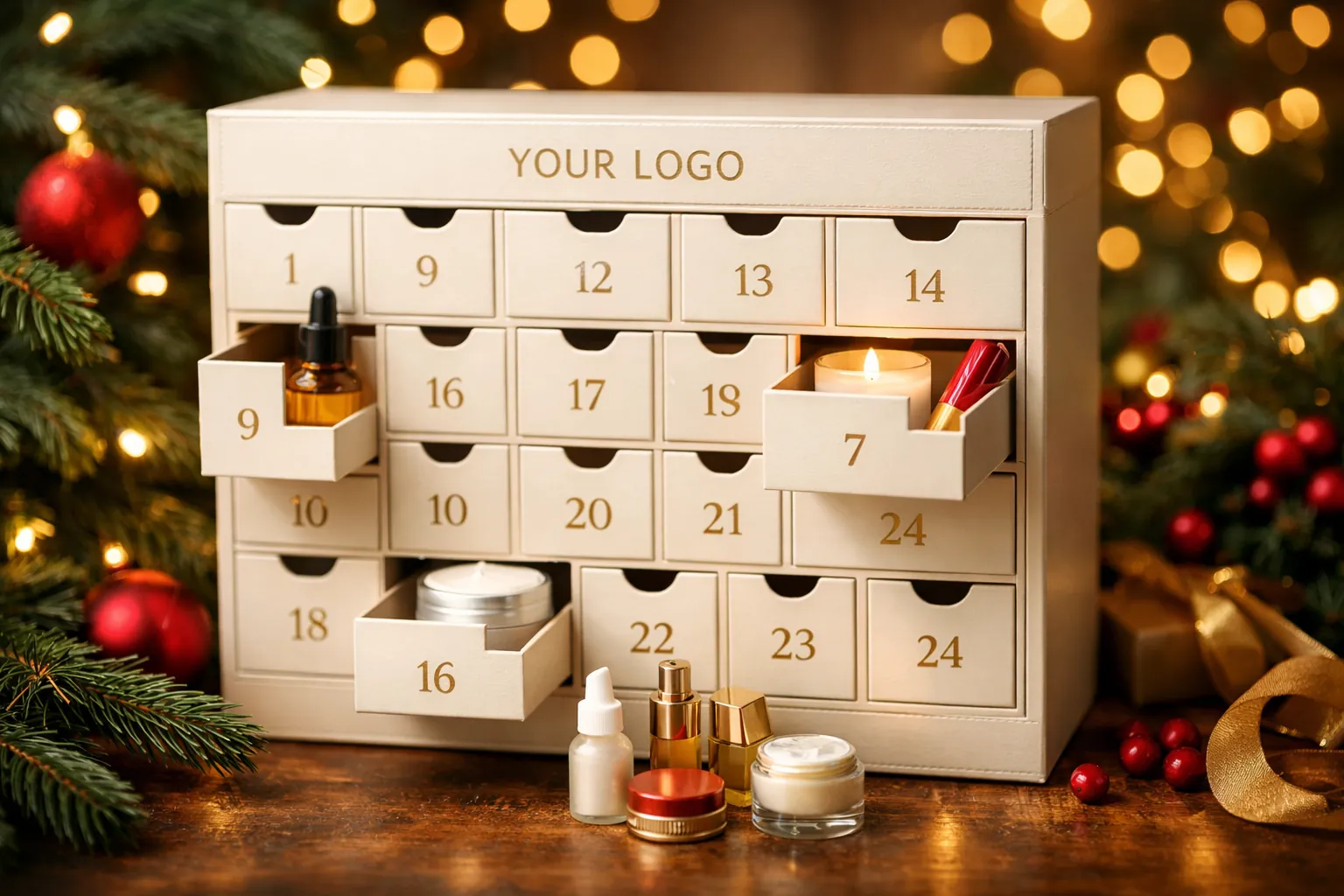
Beauty calendars
A beauty advent calendar is a premium December gift.
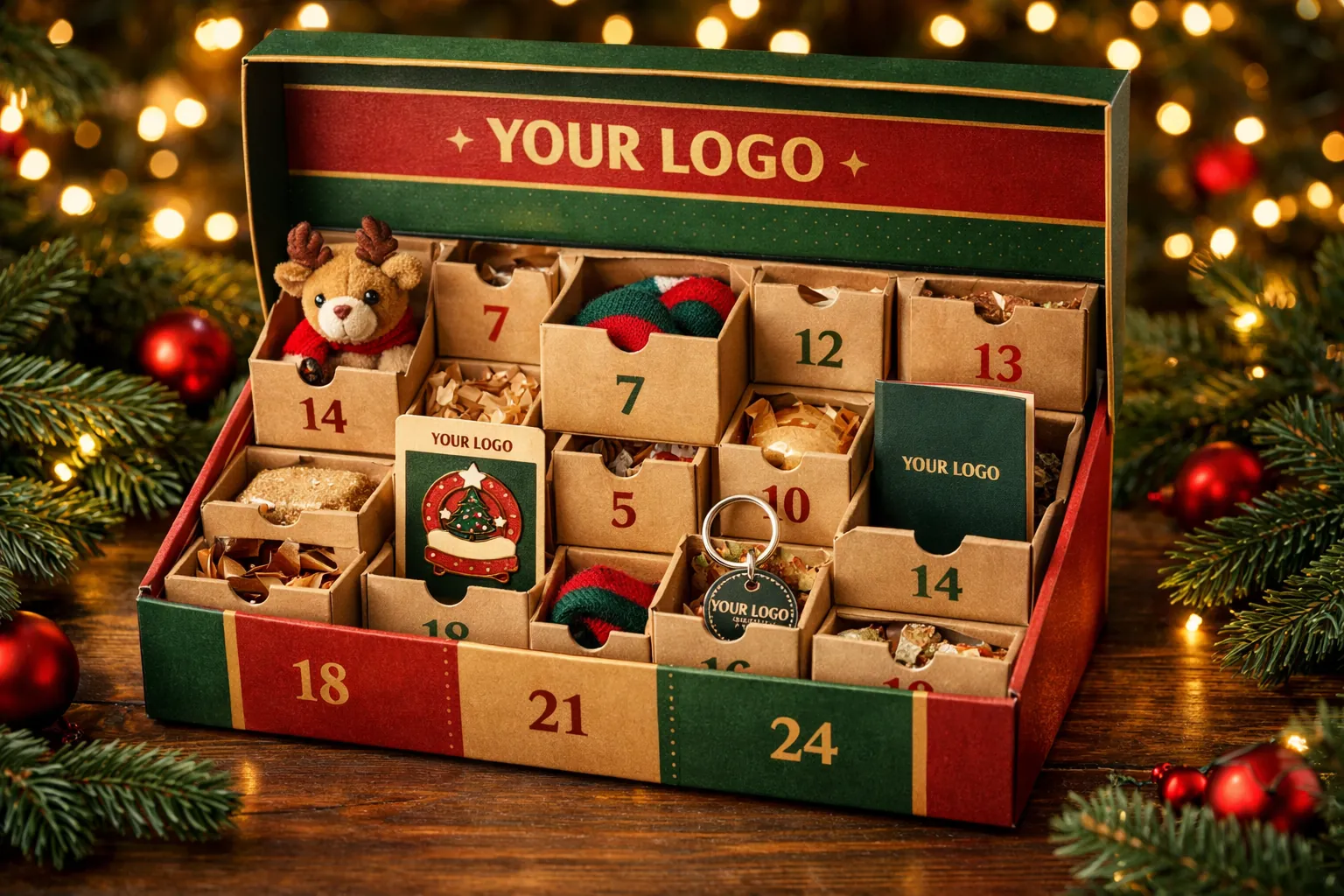
Plush & merch calendars
A merchandise advent calendar distributes your branded items across 24 doors: socks, pins, stickers, small plush and treats, each carrying your logo.
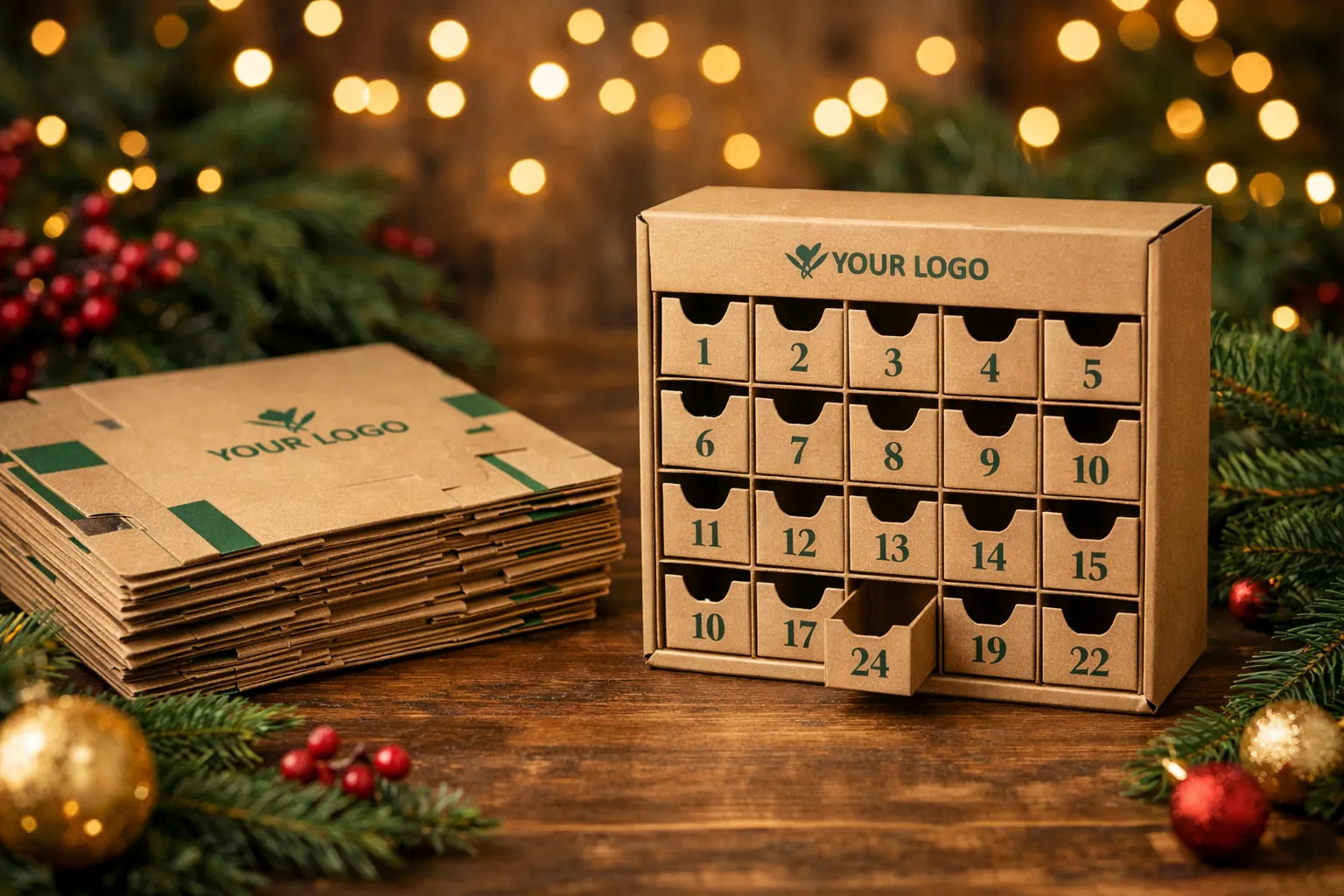
Empty calendar boxes
For companies that already have the filling: custom printed advent calendar boxes in bulk, designed around your products and delivered flat or…
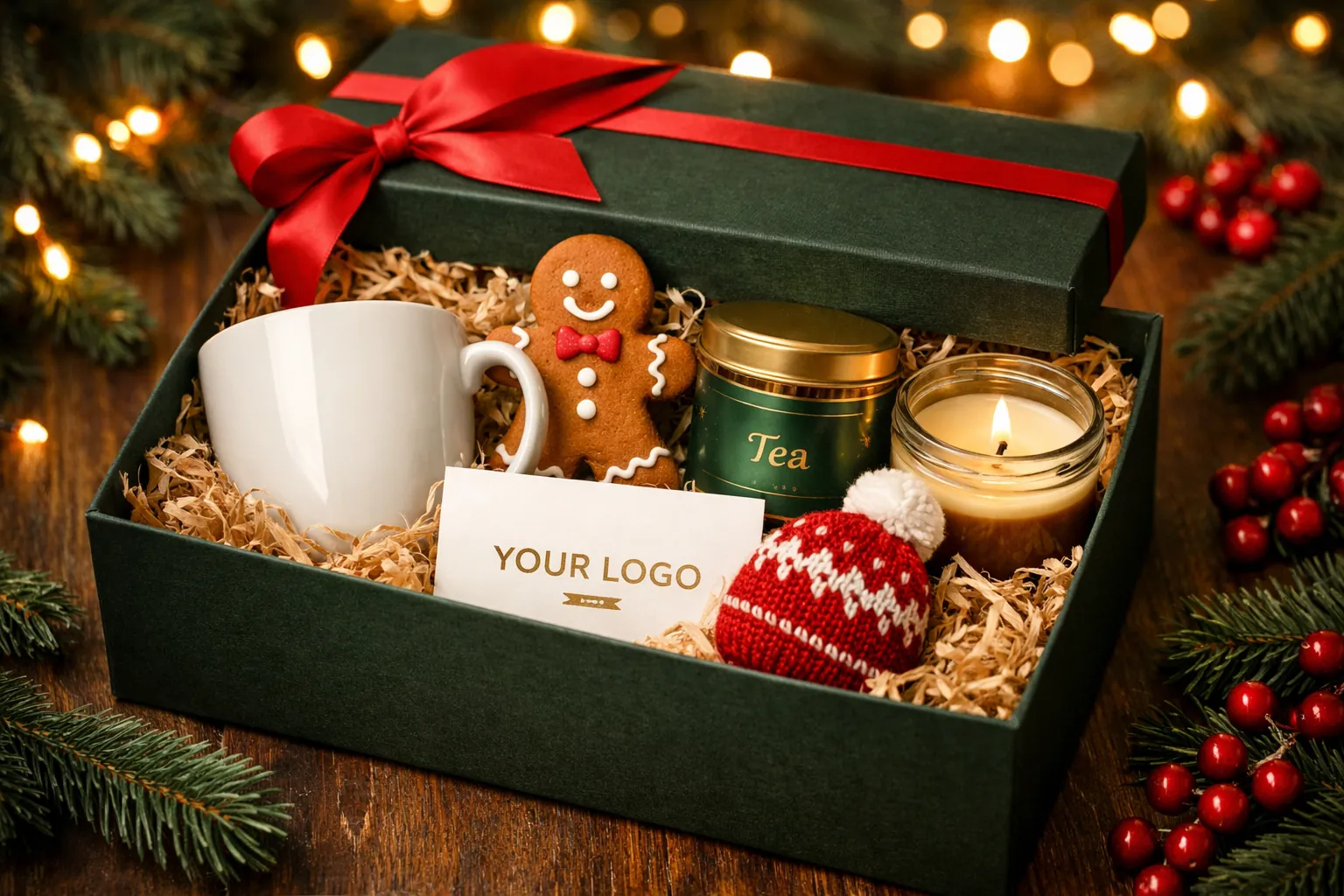
Christmas hampers
Corporate Christmas hampers with your logo on the box, ribbon or card, composed to your budget band and delivered to one office or to individual home…
Frequently asked questions
What can a Belgian employer give staff at Christmas without social-security contributions?
According to payroll providers, gifts for Saint Nicholas, Christmas and New Year are exempt up to EUR 40 per employee per year in total, plus EUR 40 per dependent child. Check with your social secretariat.
Is 26 December a holiday in Belgium?
No, only 25 December is a public holiday, although many companies close between Christmas and New Year.
Which language should Belgian corporate cards be in?
Dutch in Flanders, French in Wallonia and Brussels, German in the East Cantons. National companies often use bilingual Dutch–French cards.